Kitchen Cabinet Organization Ideas: Under the Sink, Corners, Pots and Drawers
How to organize the hardest parts of a kitchen: the under-sink cabinet, the corner cabinet, pots and pans, and messy drawers.
Save to Pinterest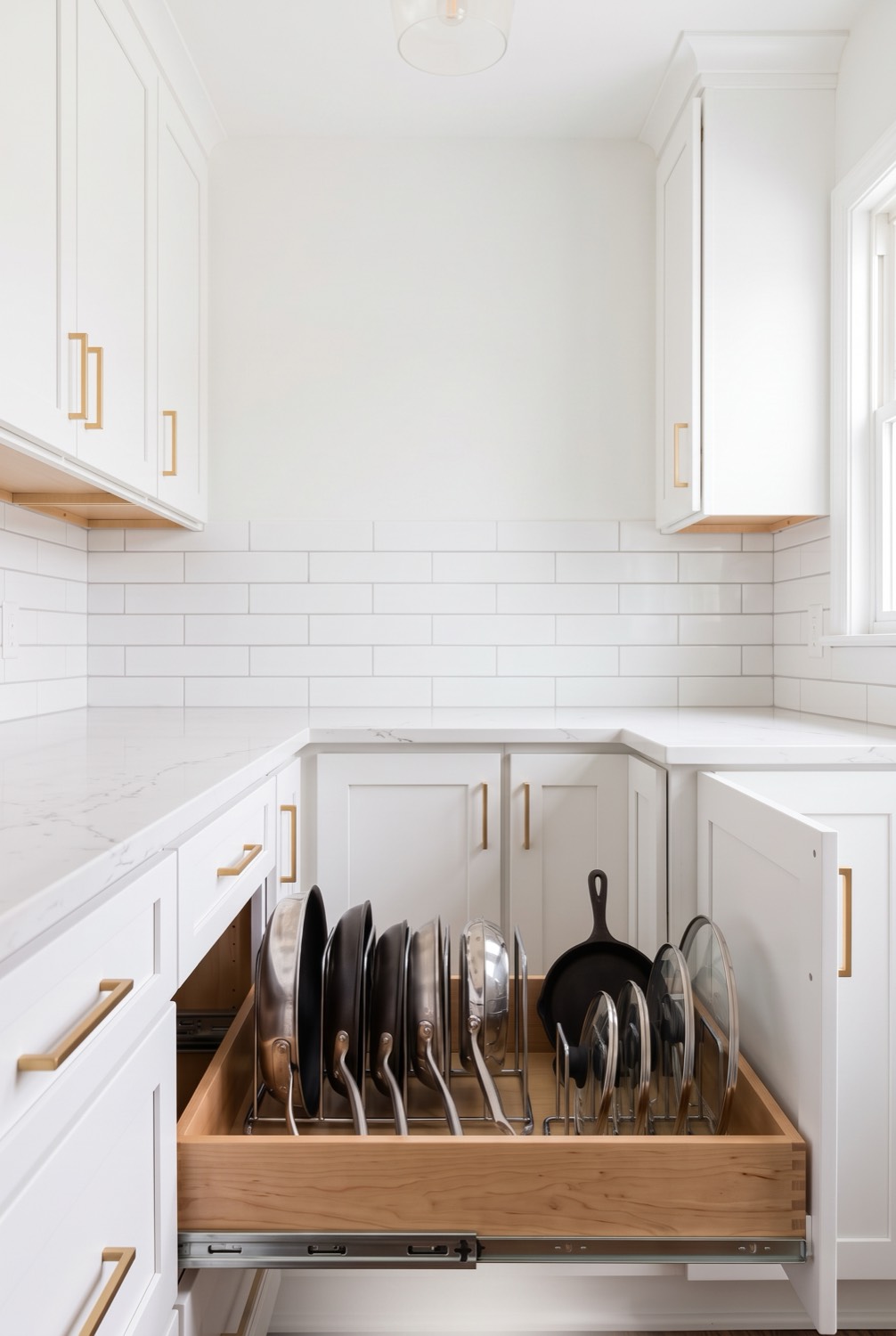
Every kitchen has the same four problem spots: the cabinet under the sink, the corner cabinet, the pots and pans, and the drawer where utensils go to tangle. They’re hard because of their shape, not because of how much you own. Each one needs a slightly different fix.
Under the sink
The cabinet under the sink has pipes running through the middle, a damp floor and usually far too many cleaning bottles. Here’s how to make it work.
Empty it and protect the floor. Take everything out, wipe it down and add a waterproof shelf liner or a drip tray. If a pipe ever leaks, the liner catches it before it ruins the cabinet base.
Work around the pipes, not against them. Two-tier sliding organizers are made for this space. Place one on each side of the plumbing and you double the usable height without blocking the pipes.
Put a turntable in the back. Cleaning bottles at the back of the cabinet are hard to reach. A turntable brings them forward with one spin.
Use the door. A small caddy or a few adhesive hooks on the inside of the cabinet door hold sponges, brushes, gloves or a roll of trash bags.
Keep only what you use for the kitchen here. Bathroom cleaners and backstock can live somewhere else.
The corner cabinet
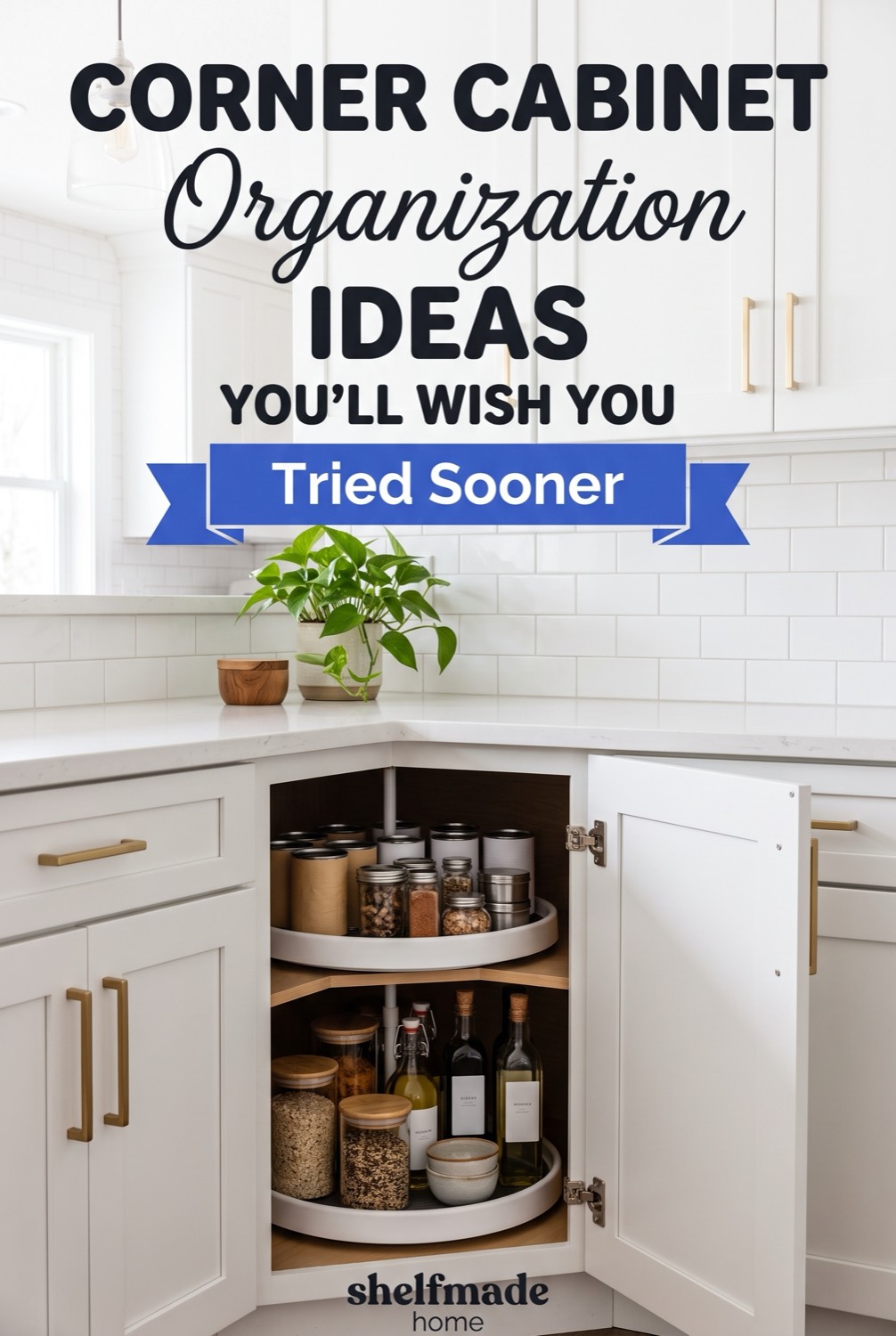
Corner cabinets are deep, dark and awkward. Things go in the back and are never seen again. The easiest fix is a large turntable, or two stacked on separate shelves. Everything at the back comes to the front with a turn, and nothing gets lost.
Use the corner for things you need weekly rather than daily: oils, canned goods, baking supplies or snacks in bins. If your corner cabinet is very deep, keep the heaviest items on the bottom shelf so the turntable stays stable.
Pots and pans
Stacked pans scratch each other and make you lift three to reach one. Storing them upright solves both problems.
Stand pans on their edge. A vertical pan rack inside a lower cabinet holds skillets and baking sheets on their side, like files in a folder. You pull out the one you need without moving the others. Place it on a roll-out shelf if you have one, so the back of the cabinet is easy to reach.
Give lids their own spot. Lids are the hardest thing to store because they don’t stack. A lid organizer keeps them upright next to the pans, or you can mount a lid rack on the inside of the cabinet door.
Nest what you can. Pots of different sizes nest inside each other with the lids stored separately. Keep only the pots and pans you actually use in the kitchen. The big stockpot you use twice a year can live on a higher shelf.
Kitchen drawers
A drawer without dividers turns into a jumble within a week. Drawer organizers fix that by giving every tool its own spot.
Measure first. Measure the inside width, depth and height of the drawer. Expandable bamboo dividers adjust to most drawers and look warmer than plastic.
Sort by use. The top drawer near the stove holds cooking utensils. The drawer near the prep area holds knives, measuring spoons and peelers. Rarely used gadgets go in a lower drawer.
Tame the food containers. Food storage containers are easier to manage when you keep fewer of them. Choose one set that nests, store the lids upright in a small bin or lid holder, and recycle any container that’s missing its lid.
One cabinet at a time
Don’t try to organize every cabinet in one weekend. Start with the one that frustrates you most, usually under the sink, and finish it completely. Once one cabinet works, the next one goes twice as fast.
For more ideas, the Kitchen Cabinet Organization Hacks board on Pinterest is updated every day.